Pest control referrals, Augusta, Georgia
Termite control in Augusta, Georgia
Winged insects indoors, mud tubes on a foundation or soft wood in a sill are all reasons to get a house looked at. Termites usually work slowly, so you have time to make a careful call.
Call (706) 538-9714Calls answered: early morning to late evening
How to recognise termites
Often the first thing people see is a swarm: winged termites coming up indoors, hundreds or thousands within minutes. The ones that come out indoors are unlikely to start a new colony, but they do mean a mature colony is close by.
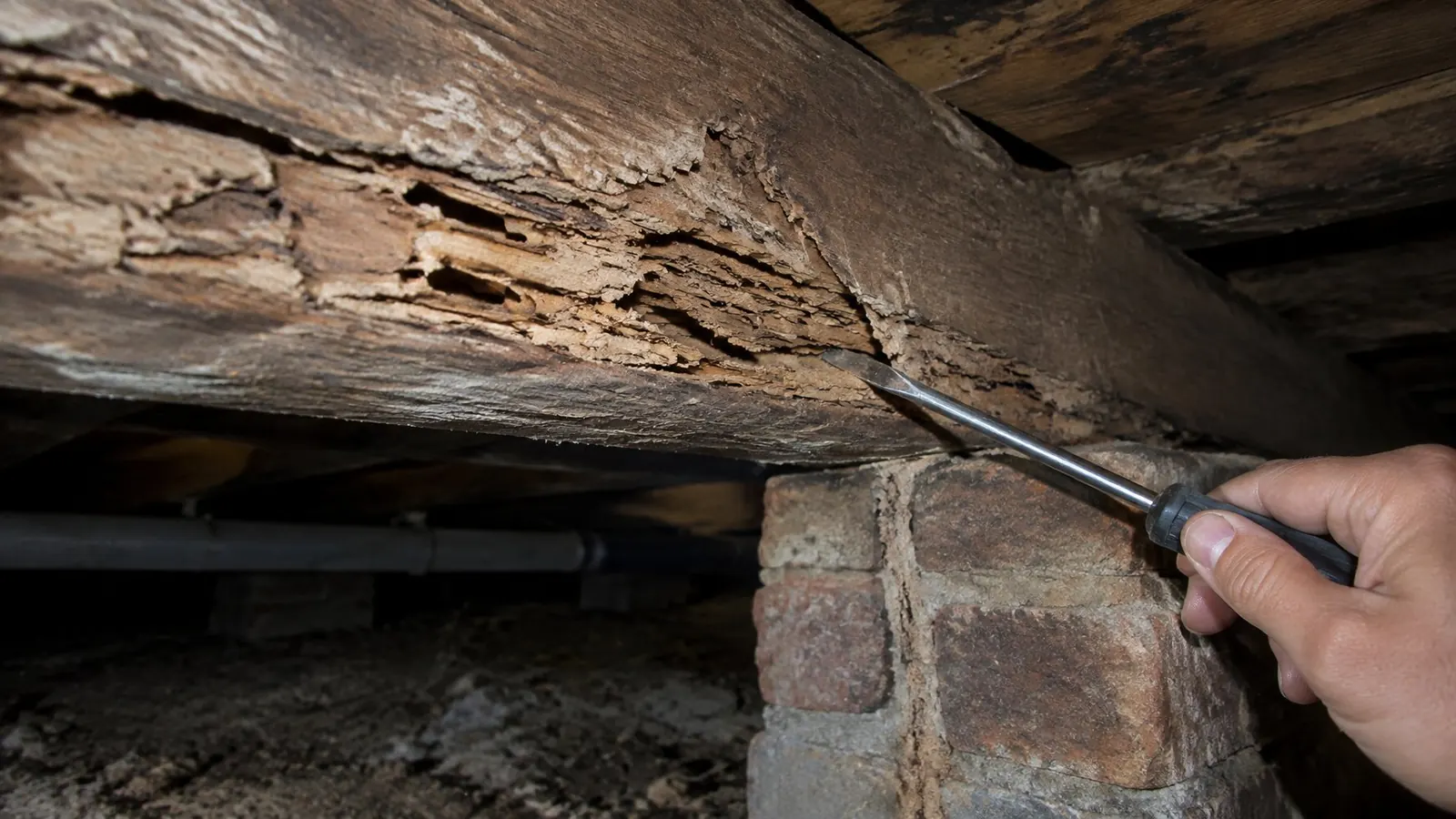
Look next for shelter tubes, the pencil-line mud tunnels termites build over concrete and brick. They often follow the joint between wood members, sill plates and cracks in a slab. A tube on wood, or soil packed inside damaged wood, should be read as a past or present infestation.
Winged termites and flying ants get confused all the time. Termites have straight antennae, no real waist and two pairs of wings of the same size. Ants have elbowed antennae, a pinched waist and bigger front wings. Shed wings on a windowsill are a sign worth reporting.
Sources: UGA Extension Bulletin 1241 and Bulletin 1209.
Why termites show up around Augusta, Georgia
Subterranean termites are most abundant in the South and Southeast. UGA says almost any suburban yard in the region will have them feeding on fence posts, landscape ties, stumps, fallen limbs or firewood. A colony in the yard is normal. The question is whether it has reached the house.
Termites dry out easily, so they need moisture. Moisture is the main limit on where they can live. A leaking roof, a gutter that overflows against a wall, condensation or a wet crawl space can all help them along. They prefer softwoods like pine, which is what most framing is made of.
The eastern subterranean termite typically swarms from February through April. Two southeastern species swarm later, between April and September, so a swarm in summer is not automatically something else.
Sources: Bulletin 1241 and Bulletin 1209.
What a termite visit usually involves
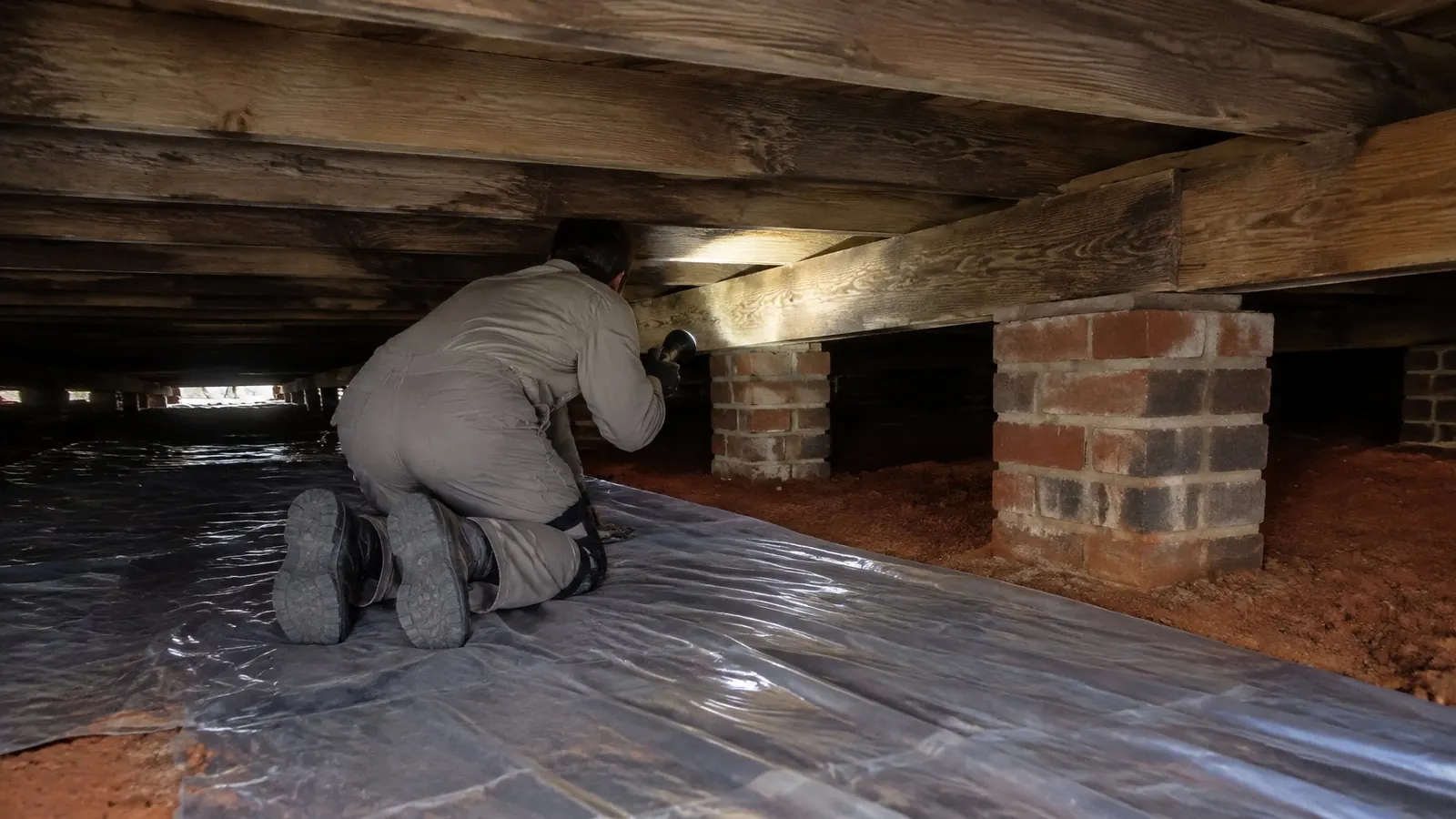
An inspection comes first. Georgia's Department of Agriculture expects inspectors to probe and sound all visible and accessible wood. Expect a flashlight, a probe or screwdriver, and a trip into the crawl space if the house has one. UGA says a typical inspection can take up to an hour or more, and that you should be there for it.
In a raised house the inspector checks foundation walls, piers and the lumber resting on them. On a slab, the focus moves to expansion joints and the gaps around utility pipes, which are common ways in.
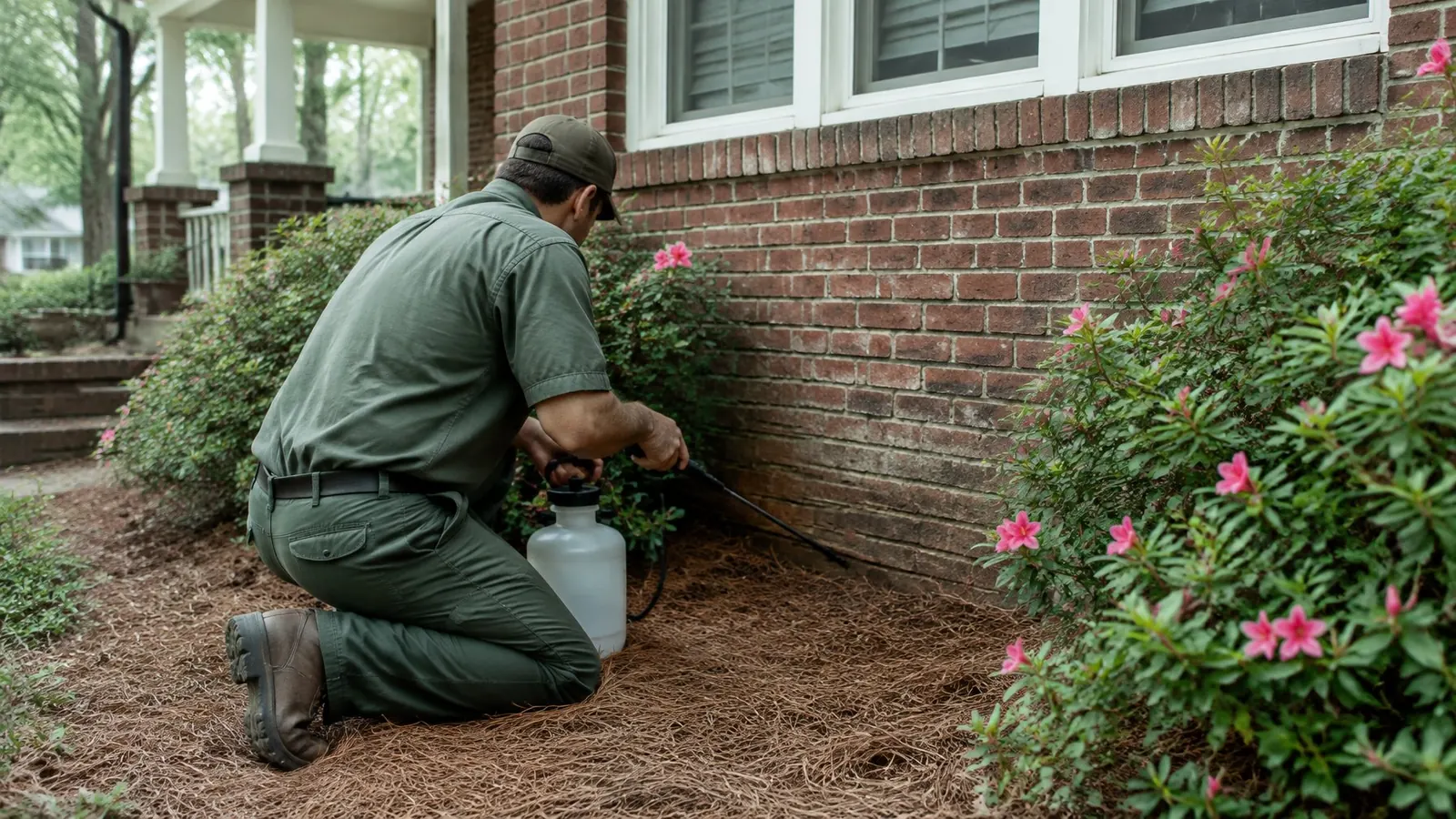
If termites are active, the company will explain its treatment, usually a liquid termiticide or a bait program. A complex infestation can take more than one treatment. Most companies offer a contract that renews every year. Ask whether it covers retreatment only or repairs too, since those are the two basic types in Georgia.
Source: UGA Extension Bulletin 1241.
When to call
Call if you see winged insects coming up inside, mud tubes anywhere on the house, or wood that sounds hollow or crumbles along the grain. UGA advises against treating an existing infestation yourself, because the hard part is finding where the termites get in.
Do not rush the choice. UGA notes that the extra damage in the few weeks it takes to pick a company is unlikely to be significant. Compare what you're told, and check the license first with the Georgia lookup. Buying a house? Read about the termite letter.
Termites: common questions
Is a swarm inside the house an emergency?
No. Termites usually damage wood slowly, and the swarmers themselves are unlikely to start a colony indoors. It is a good reason to book an inspection soon, and you still have time to choose a company carefully.
Can I tell termites from flying ants myself?
Often, yes. Look at the antennae, the waist and the wings. Your county Extension office can also identify a specimen or a photo for you.
Do dry mud tubes mean the termites have gone?
Not necessarily. UGA says dry, brittle tubes usually mean termites have left that route, but they may have found another. Have it looked at. Source: UGA Bulletin 1241.
Got pests right now? Make the call.
You'll be connected with an independent pest control company that serves your part of the Augusta, Georgia area. Have your ZIP code ready, and say what you've been seeing and where.
Call (706) 538-9714Calls answered: early morning to late evening
Calls may be recorded. Read the referral disclosure and privacy policy.